Inside Look at Our In-House Program: Where Foundations are Built
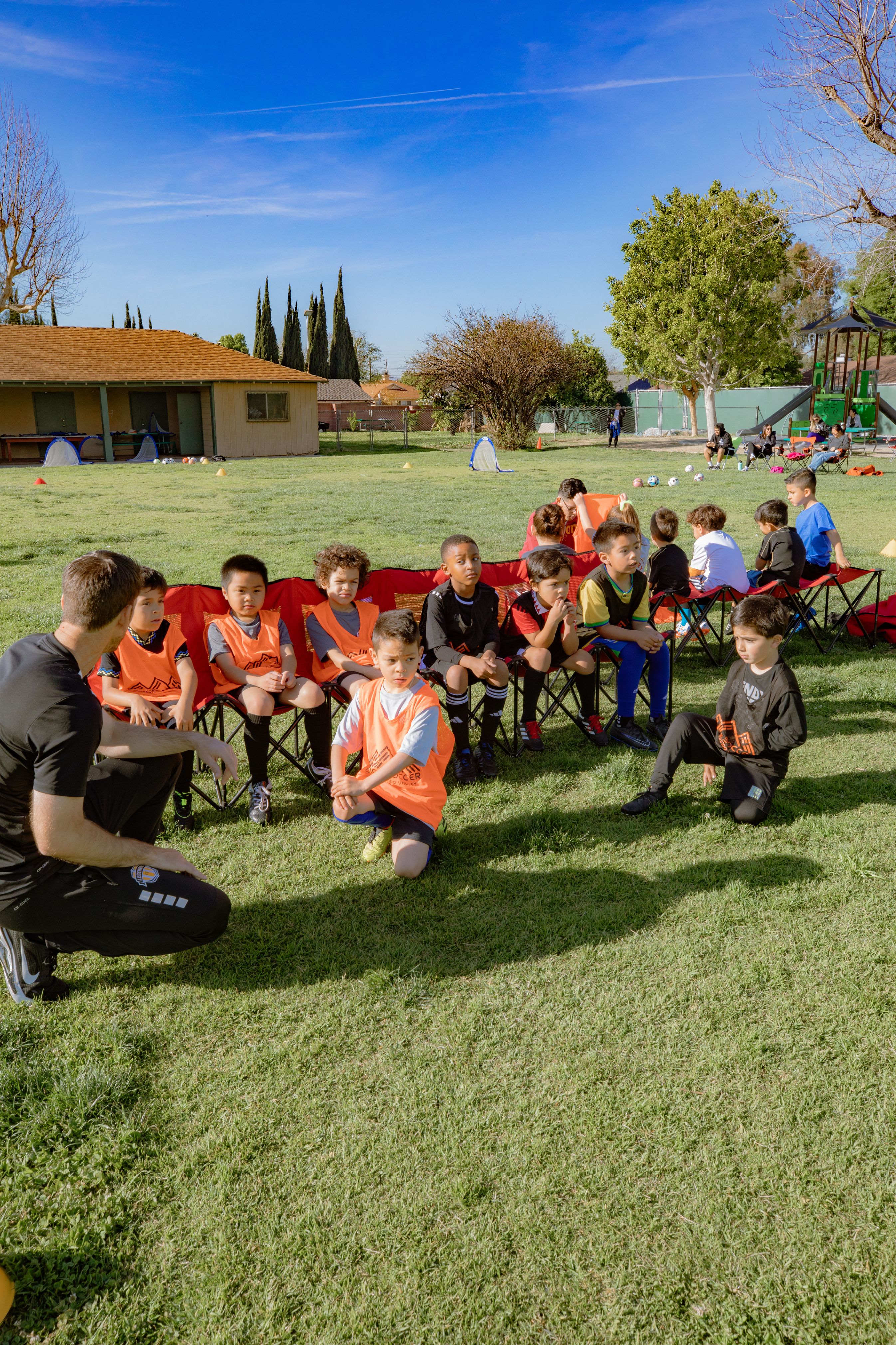
Inside Our In-House Program, Where Foundations Are Built
At Vision Soccer, Our In-House Program is where the foundation for every player is built. We focus on coordination, body movement, confidence on the ball, and most importantly, igniting a passion for the game.
Before players can understand tactics or positions, they must first learn how to master the ball, move, think, and play freely with the ball at their feet. Our In-House Program is designed to create that foundation, one that will support every player for years to come as the game becomes more complex.
What Makes Our In-House Program Different
A lot of programs start with “team play” and positions, however this is how we prioritize developing a player’s foundation.
Movement first.
Ball second.
Game intelligence third.
Our In-House curriculum focuses on:
Psychomotor development (how well kids move their bodies)
Ball mastery and dribbling
1v1 and 2v1 play
Small-sided 3v3 and 4v4 games
Players learn through carefully structured sessions that mix skill development, creativity, movement, and fun. These are not just drills, they’re experiences designed to help kids understand the game while building real foundations in a joyful, low-pressure environment.
Our Session Blueprint: Three Equal Parts
Every In-House session is broken into three equal parts, each one serving a specific purpose in your child’s development:
Psychomotor & Ball Skills (including dribbling)
1v1 and 2v1 Play
Small-Sided Games (3v3 and 4v4)
This “training recipe” is the reason our players improve so quickly, gain confidence, and actually enjoy the process of learning.
Let’s break down why.
Pillar 1: Psychomotor & Ball Skills, Movement Before the Ball
It is a core belief at Vision Soccer that players must first learn to move their bodies before they can truly learn to maneuver and manipulate the ball.
Every session begins with psychomotor exercises in channels and ball-skill exercises. At ages 6–8, kids are in a critical window for developing how they move. When we talk about “psychomotor skills,” we are specifically referring to:
Locomotor skills – running, skipping, hopping, changing direction
Balance and stability – stopping without falling, landing softly, staying upright while turning
Coordination – getting the feet and eyes to work together
Rhythm and timing – moving smoothly, not just quickly
Spatial awareness – knowing where their body is in relation to other players and the field
How Ball Mastery and Dribbling Build These Skills
Ball mastery and dribbling are not just soccer specific skills, they are brain–body training.
When your child is dribbling and doing ball-mastery activities, they are:
- Improving movement quality
Accelerating, decelerating, and changing direction with the ball
Learning to move forward, sideways, and even backward with control
- Building balance and body control
Standing on one foot while tapping the ball
Shifting weight from left to right without losing stability
- Developing coordination
Using both feet (right and left)
Learning different contact surfaces (inside, outside, laces)
Tracking the ball visually while the body moves in different directions
- Strengthening rhythm and timing
Repeating patterns like toe taps, foundations, and inside/outside touches
Learning to move with a consistent tempo and smoothness
- Sharpening spatial awareness and reaction
Keeping the ball close while avoiding other players
Reacting to coach commands, colors, numbers, or gates
We invest time into movement and ball mastery because it is the most powerful way to make young athletes comfortable in their bodies and build long and build long term soccer players.
Pillar 2: 1v1 and 2v1, Learning to Solve Problems
After the first phase of our training curriculum, we shift into our 1v1 and 2v1 situations. This portion of our curriculum begins to integrate both technical ability and tactical concepts. This is the stage that is most often skipped in a player's early years by introducing team tactics prior to players demonstrating success and understanding in 1v1 and 2v1 situations.
Here, our players learn to:
Attack defenders with confidence
Use changes of speed and direction
Protect the ball under pressure
Make simple decisions: Do I dribble, pass, or shoot?
This is where the movement and ball skills from Part 1 start to show up in real situations. Players are now required to play with their heads up, find the solutions, and bring the technical and tactical parts of the game together.
Pillar 3: Small-Sided Games: Learning the Game Through Playing
The final part of each session is dedicated to small-sided games (3v3 and 4v4).
In these games, players experience:
Lots of touches on the ball
A greater number of 1v1 and 2v1 situations
Constant involvement in attack and defense
Opportunities to try what they just learned
Simple exposure to teamwork, spacing, and transition
Small-sided games are where the joy of soccer comes alive. The field is smaller, there are fewer players, and that means more meaningful actions per child.
Instead of getting “lost” in a bigger 7v7 or 9v9 game where there are more players on the field, small sided games allow players to be constantly involved so that they can put it all together (dribbling, passing, shooting, and defending). This is how game intelligence starts to grow naturally.
Yearly Timeline: The Rhythm of Our In-House Program
Our In-House Program runs almost year-round, offering families flexibility while maintaining continuity in development.
Program Schedule:
January–February: Winter ‘Skills’ Session, Two practice options per week (Mondays at 6pm & Tuesdays at 5pm)
March–April: 3v3 Spring League, Two practice options per week + Saturday games
May: May ‘Skills’ Session, One practice per week
June–July: Summer morning ‘Skills’ Sessions
August: August ‘Skills’ Session’, One practice per week
September–October: 3v3 Fall League, Two practice options per week + Saturday games
November–December: Break
This consistent rhythm keeps kids engaged and growing, while still allowing time for family, school, and rest.
The Vision Pathway: From Grassroots to Competitive
The In-House Program is the starting point in the Vision pathway.
From here, players who are ready for more challenges can move into Vision Academy, our hybrid training model that bridges grassroots development and competitive play, and eventually into Vision FC competitive teams.
At every stage, our philosophy stays the same:
We build the player before the team.
By prioritizing psychomotor development, ball mastery, 1v1 play, and small-sided games in our In-House Program, we ensure that every child has the confidence, coordination, and technical foundation to thrive as the game becomes more complex. In the long run, this dedicated curriculum makes a big impact on a player's development due to all the additional touches on the ball, 1v1, and 2v1 situations. Over a long period of time, this creates a snowball effect and allows players to improve quickly and develop a strong foundation that will allow them to be prepared for the game later down the road when the game becomes more complex.
Conclusion: The Foundation for What Comes Next
Our In-House Program is where players discover how to move, how to think, and how to enjoy the game in its purest form.
In our upcoming blogs, we’ll take you inside Vision Soccer’s Academy to show how we introduce competition to players that have developed a strong foundation , and then inside Vision FC, where players who have mastered our foundations learn to compete with intelligence, creativity, and confidence.
Each stage of our pathway builds on the one before it, ensuring your child grows with the game, step by step, the right way.
Register for Vision's In-House Programs
If you’re looking for a development-first soccer program for your child, learn more at www.visionsoccer.org